
Quick Answer
AI healthcare diagnosis can support autism evaluation by standardizing behavioral observation, accelerating documentation analysis, and flagging diagnostic markers. AI tools analyze video interactions for autism-associated patterns, generate consistent reports, and integrate with clinic workflows—augmenting (not replacing) clinician expertise. This improves diagnostic reliability while reducing administrative burden.
AI Healthcare Diagnosis: A New Lens for Autism Evaluation
Here’s the thing—autism spectrum disorder (ASD) diagnosis has always been challenging. It relies heavily on subjective clinical observation, behavioral checklists, and practitioner experience. But what if AI healthcare diagnosis could standardize and accelerate that process? What if your clinic could leverage medical AI to catch developmental differences earlier and more reliably?
The truth is, many clinics are already exploring this. AI in medicine isn’t replacing clinicians; it’s augmenting their capability to identify patterns that matter. For clinic owners and directors managing autism evaluations, understanding how AI healthcare diagnosis tools work—and whether they fit your practice—is becoming essential.
How Medical AI Supports Autism Diagnosis
Let me walk you through what’s actually happening in practices that have integrated AI into their diagnostic workflows.
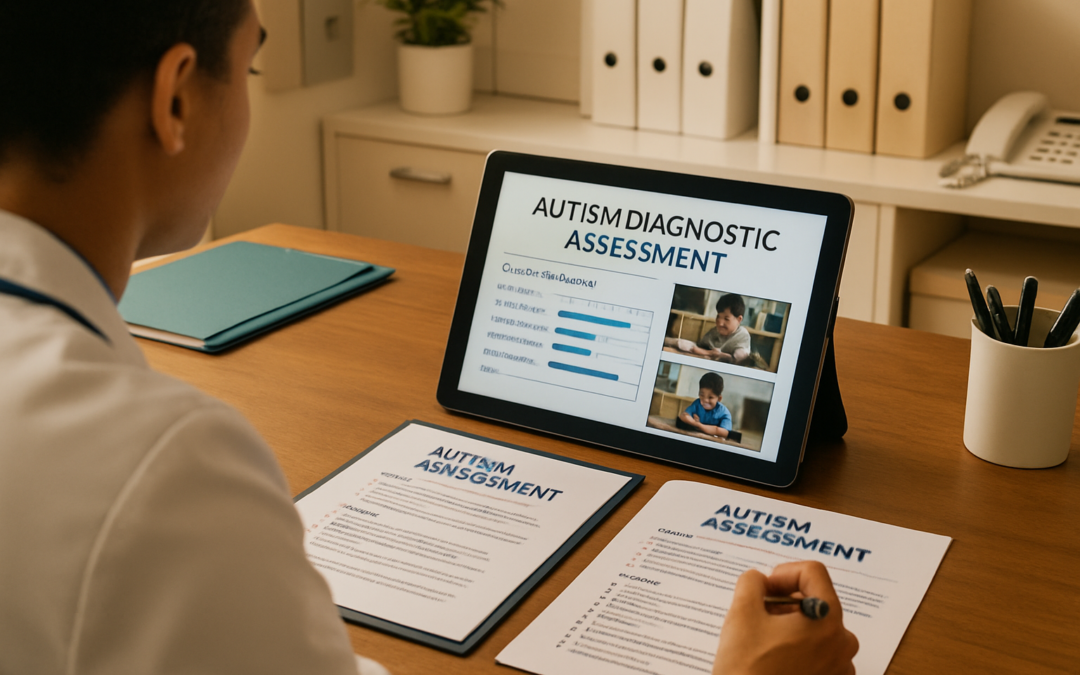
Medical AI tools analyze video recordings of child-parent interactions, looking for specific behavioral markers associated with autism. The software tracks eye contact patterns, response latency, repetitive movements, and social engagement cues. What typically takes a clinician 20-30 minutes of manual observation to document, AI can process in seconds—flagging areas that warrant deeper clinical attention.
Your healthcare AI companies are developing platforms that integrate with your existing systems. A healthcare assistant powered by AI can pre-screen intake questionnaires, organize symptom timelines, and prepare preliminary reports before your clinician even sits down with the family. This frees your clinical staff to focus on what they do best: connecting with clients and making nuanced clinical judgments.
The value here isn’t replacement. It’s consistency. Human clinicians bring irreplaceable judgment, empathy, and contextual understanding. AI brings reproducibility and speed. Combined, they’re more powerful than either alone.
Practical Applications in Your Clinic
Thinking about how this works operationally? Here’s what integration looks like:
- Initial Assessment Streamlining: An AI receptionist or healthcare assistant guides families through digital intake, collecting behavioral history and family background in a standardized format before the appointment.
- Video Analysis: During observation sessions, AI tools analyze video footage for ASD-associated behaviors, generating reports that supplement clinical notes.
- Standardized Scoring: Medical AI cross-references observed behaviors against established diagnostic criteria (DSM-5), reducing interpreter variance and improving diagnostic reliability.
- Data Integration: Your physician quality reporting system automatically aggregates data from multiple assessments, creating longitudinal profiles that show progress or changing needs over time.
- Documentation Efficiency: Robotic Process Automation in Healthcare handles report generation, appointment scheduling, and insurance documentation—tasks that currently consume hours of administrative time.
What Healthcare AI Companies Are Actually Delivering
If you’re researching healthcare AI companies, you’ll notice different approaches. Some focus purely on diagnostic support. Others offer broader platforms that combine assessment tools with treatment planning, progress monitoring, and outcome tracking through custom health care app development.
The best solutions for autism evaluation do several things well:
They maintain clinical control—your clinicians make the diagnosis, not the AI. They provide explainability, showing you exactly which observations triggered specific findings. They integrate seamlessly with your existing workflow instead of requiring staff to learn entirely new systems. And they’re designed specifically for neurodevelopmental conditions, not generic “medical AI” that hasn’t been validated for autism evaluation.
Ready to put AI to work?
Book a free 30-minute discovery call. We’ll map your current workflows, identify the highest-impact AI use cases, and give you a no-obligation roadmap.
Addressing Your Real Concerns
You’re probably wondering: Is this accurate? Will insurance cover it? Will my staff actually use it?
On accuracy—research shows well-developed AI diagnostic support tools achieve sensitivity and specificity rates comparable to experienced clinicians. They don’t miss cases that clinicians catch, and they’re equally good at ruling out ASD when it’s not present. The key is choosing validated tools with peer-reviewed evidence backing their performance.
On adoption—this matters more than most vendors admit. Even the best ai in medicine fails if your team resists it. Successful implementation requires staff training, clear protocols showing how AI findings integrate into your existing diagnostic process, and buy-in from your clinical leadership. That’s why working with developers who understand healthcare workflows—not just tech—makes a difference.
Insurance coverage is evolving. Some payers reimburse diagnostic codes whether you use AI support or not. Others specifically reimburse for AI-assisted assessment when documented. Your billing specialist should verify your payers’ specific policies before implementation.
Building Your AI-Supported Autism Evaluation Practice
Start small if this is new territory for your clinic. Pilot a single AI diagnostic tool with one clinician before rolling out organization-wide. Track metrics that matter: diagnostic accuracy compared to your historical patterns, time savings per evaluation, and clinician confidence in findings.
Partner with developers who specialize in your niche. A custom health care app development firm that understands autism, ABA, and behavioral health—not a generic software vendor—will build something that actually fits how your clinic works. They’ll understand why your intake process looks different from general pediatrics. They’ll know why your documentation needs are specific to autism evaluation.
Document your workflow before bringing AI in. When developers understand your current process—what your clinicians do, what your admin staff handles, where bottlenecks exist—they can implement solutions that enhance rather than disrupt your operations.
The Bottom Line
AI healthcare diagnosis isn’t a replacement for skilled clinicians evaluating autism. It’s a force multiplier. It standardizes observation, accelerates documentation, reduces clinician burden on administrative tasks, and helps you serve more families without sacrificing quality. For clinic directors managing growing wait lists and limited staff capacity, that’s genuinely transformative.
The clinics thriving right now aren’t the ones avoiding AI. They’re the ones thoughtfully integrating it—choosing tools built for their specific needs, training their teams thoroughly, and keeping clinical judgment at the center of their process. That’s the path forward for autism evaluation in healthcare.
Frequently Asked Questions
Does AI actually improve autism diagnosis accuracy?
Yes. Peer-reviewed research shows validated AI diagnostic support tools achieve sensitivity and specificity rates comparable to experienced clinicians. They're particularly effective at identifying subtle behavioral patterns humans might miss during routine observation. However, the AI supports the diagnosis—your clinician makes the final determination.
Will insurance cover AI-assisted autism evaluation?
Coverage varies by payer. Some reimburse diagnostic codes regardless of methodology. Others specifically reimburse AI-assisted assessment when documented appropriately. Your billing specialist should verify your specific payers' policies before implementation.
How much time does AI actually save in clinic operations?
Most clinics report 30-45% reduction in documentation time per evaluation. Intake processing, video analysis, and report generation that typically required 90-120 minutes of staff time drops to 45-60 minutes. Administrative savings increase when integrated with Robotic Process Automation for scheduling and insurance submissions.
What's the difference between generic medical AI and autism-specific solutions?
Generic medical AI isn't validated for neurodevelopmental conditions and often misses subtle autism presentation patterns. Autism-specific AI is trained on ASD diagnostic criteria, understands developmental context, and recognizes cultural and demographic variations in how autism presents. Custom healthcare app development for your niche ensures relevance.
How do I choose the right healthcare AI partner for my clinic?
Look for developers with demonstrated experience in autism, ABA, and behavioral health—not generic health tech vendors. Ensure they understand your existing workflows before suggesting solutions. Verify their tools are peer-reviewed, offer explainability, maintain clinician control over diagnoses, and integrate with your current systems rather than requiring complete workflow redesign.
Want to scale smarter with AI?
Let’s map out your highest-impact AI opportunities in a quick, 30-minute session – 100% free with zero obligation.
